
Blog
The Ultimate Guide to Industrial Resin Flooring Systems in the UK
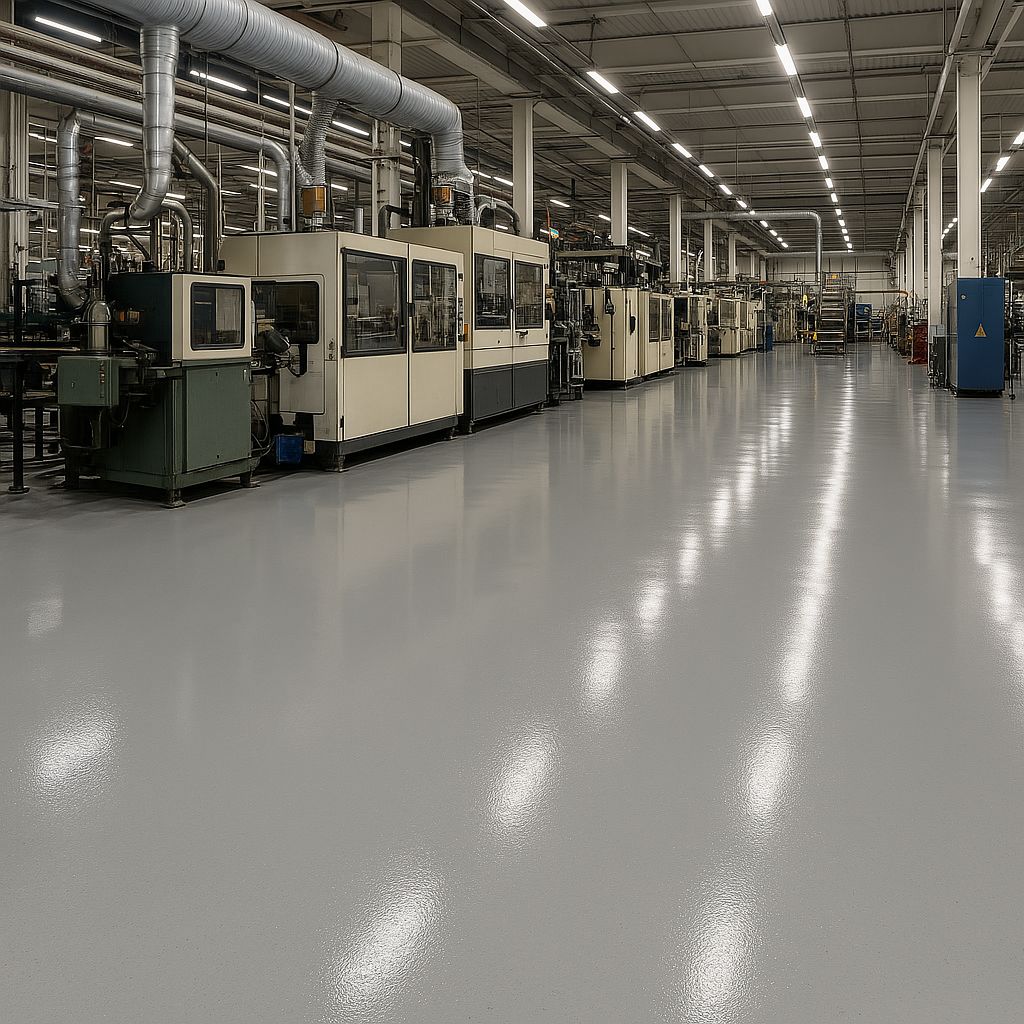
Table of Contents
Durable, Hygienic, and Smart Solutions for Modern Industrial Environments
Introduction
In industrial environments, the flooring needs to be functional and durable, resistant to chemicals, mechanical, and thermal impacts, and maintainable. It doesn’t matter if you’re overseeing food manufacturing facilities, warehouses, logistics centres, or pharmaceutical facilities, selecting appropriate resin flooring systems can help reduce downtime, enhance safety and improve operational performance.
In this guide, we review the four most common industrial resin systems used in the UK:
- Epoxy Coating
- Epoxy Self-Levelling (SL)
- MMA (Methyl Methacrylate) Flooring
- PU Cement / PU Screed Systems
1. Epoxy Coating Systems
Overview
Epoxy coatings are thin-layered resin systems (usually 0.3–1.5mm) that are applied on to concrete surfaces. Due to their resistance to chemicals and ease of upkeep, epoxy coatings are suitable for light to medium traffic areas.
Key Benefits:
- A smooth and clean surface
- Resistant to oils, solvents and cleaning chemicals
- Available in a wide array of colours, which can be used for demarcation
- Anti slip additives can be included
- Economical and fast to install
Typical Applications:
- Storage facilities and warehouses
- Garages and car workshops
- Plant rooms and technical areas
- Mechanical workshops
UK Market Price:
£25–£35 per m², depending on size, substrate, and finish.

2. Epoxy Self-Levelling (SL) Systems
Overview
Epoxy SL flooring is a thicker fluid-applied system that is able to self-smooth and form a visually flat, seamless, glossy finish. It is more durable than the standard epoxy coating and can withstand moderate to heavy mechanical loads.
Key Benefits:
- A smooth, glass-like finish
- Tough and resistant to wear and tear
- Easy to clean, perfect for clean areas
- Suitable for medium industrial environments
Typical Applications:
- Pharmaceutical production areas
- Clean rooms and laboratories
- Electronics and packaging factories
- Commercial kitchens
UK Market Price:
£45–£65 per m² depending on the size of the project and the state of the substrate.
3. MMA (Methyl Methacrylate) Resin Flooring
Overview
MMA is a fast-curing resin system which can fully cure in 1–2 hours regardless of the temperature being subzero. This is particularly useful in projects where there is a need to reduce downtime as much as possible.
Key Benefits:
- Ultra-fast installation and curing time
- It can be applied in cold storage and refrigerated zones
- Extremely chemical-resistant
- Durable and UV stable, can be used outdoors
- Recoating or repair is quite easy
Typical Applications:
- Food processing plants
- Supermarkets and cold rooms
- Distribution centres
- Retail spaces with high footfall
UK Market Price:
£65–£75 per m², which is contingent upon the thickness, colour, and slip resistance of the flooring.

4. PU Cement / PU Screed Flooring
Overview
PU (polyurethane) screeds are heavy-duty resin flooring systems with a thickness of 6mm to 12mm and are capable of withstanding extreme thermal shock, heavy traffic, and aggressive chemical exposure.
Key Benefits:
- Good thermal resistance (e.g., steam cleaning, high-temperature areas)
- Suitable for wet processing zones and extreme hygiene areas
- Very high compressive strength
- Can be textured for aggressive anti slip finishes
- Lasts long and is low cost to maintain
Typical Applications:
- Breweries and commercial kitchens
- Meat and dairy processing facilities
- Pharmaceutical and chemical manufacturing
- Heavy-duty workshops and loading bays
UK Market Price:
£55–£75 per m², depending on thickness and surface preparation.
|
System |
Thickness |
Cure Time |
Thermal Resistance |
Chemical Resistance |
Typical Use |
|---|---|---|---|---|---|
|
Epoxy Coating |
0.3–1.5mm |
24–48 hours |
Low |
Moderate |
Warehouses, garages |
|
Epoxy SL |
2–4mm |
24–48 hours |
Moderate |
Good |
Labs, pharma, clean rooms |
|
MMA |
3–6mm |
1–2 hours |
Moderate |
High |
Food processing, cold storage |
|
PU Cement / Screed |
6–12mm |
3–5 days (full) |
High (120°C+) |
Very High |
Very High |

Frequently Asked Questions (FAQs)
Which system is best for chemical resistance?
The PU Screeds and MMA systems stand as the superior options for acid, alkaline, oil and solvent resistance.
Are there any requirements for applying floors over existing tile or damaged concrete?
Resin systems require proper surface preparation for installation over tile surfaces and old coatings as well as damaged concrete substrates.
Are resin floors slippery?
Our resin floors come with anti-slip finishes that match the required safety standards for your environment.
Do resin floors meet health and safety regulations?
Yes. The correct installation will make these floors meet or exceed HSE standards for hygiene along with slip resistance and durability.
Conclusion: Why Choose Industrial Resin Flooring?
Every business operation requires a resin system that fulfils its specific needs regarding durability, hygiene, chemical resistance or fast installation.
The two flooring technologies represent vital components of modern industry because they provide support to hygienic food production facilities as well as high-load logistics hubs and chemical processing plants.
As industrial resin flooring specialists across the UK we deliver customized flooring solutions to contractors and engineers and plant managers throughout London Birmingham Manchester Leeds Liverpool and all major industrial areas.
Request a Site Visit or Quote
Our company provides no-cost site surveys combined with technical advice and quick quotations for industrial resin flooring construction projects.
Get in touch with us to determine which system best fits your operational requirements.
- share